
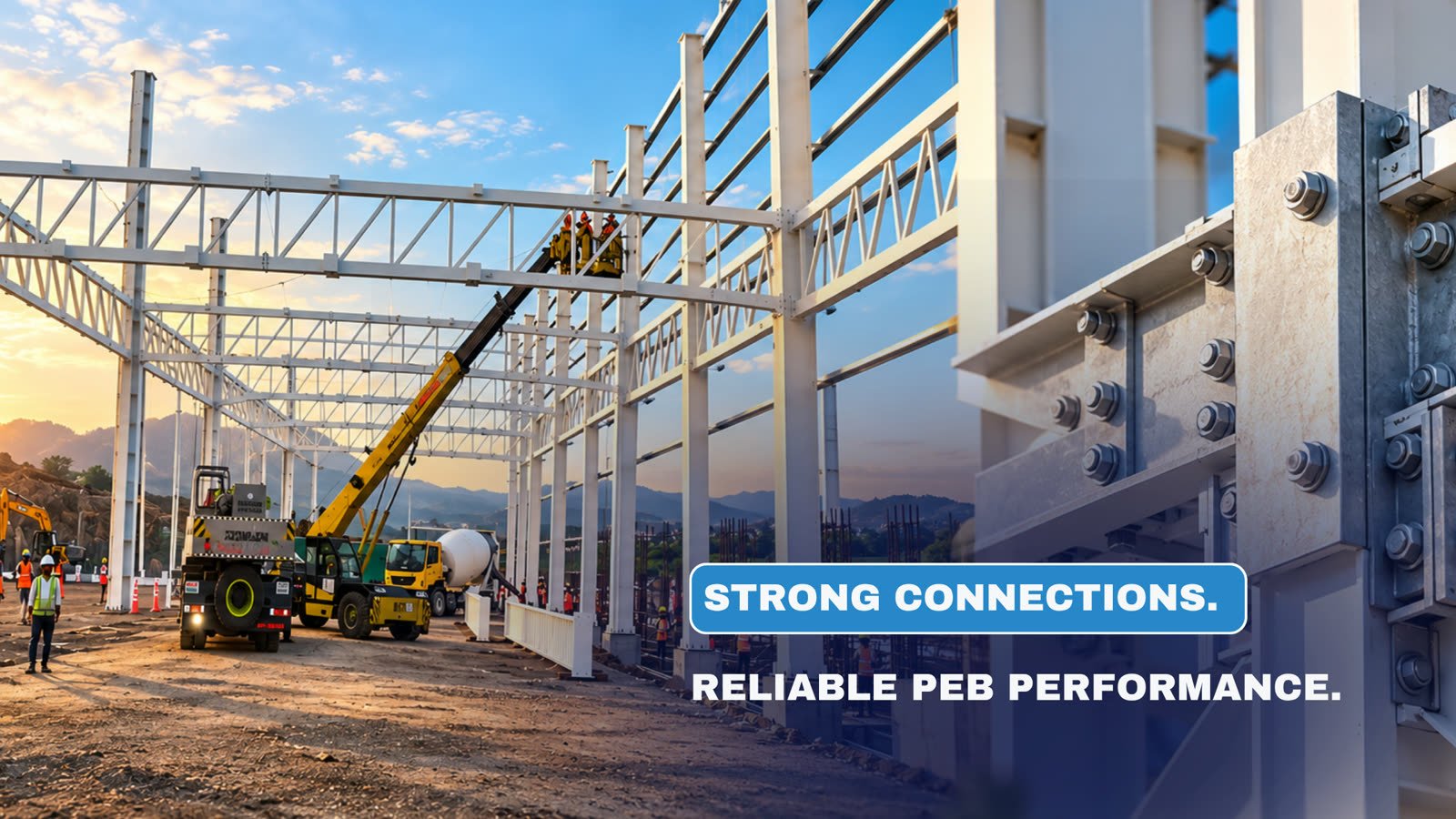
A Pre-Engineered Building (PEB) is made up of several engineered components that work together as a structural system. While primary and secondary structural members receive considerable attention during PEB design and fabrication, the connections joining these components are equally important.
PEB connection design plays a critical role in transferring loads between structural members and maintaining the stability and performance of the building. Properly engineered connections can contribute to structural reliability, durability and consistent performance throughout the building's service life.
What is Connection Design in PEB?
In a PEB structure, different components such as columns, rafters, purlins, bracings and other structural members need to be connected effectively.
Connection design in PEB determines how these members interact and transfer forces from one component to another. Depending on the structural requirement, connections may involve bolted or welded assemblies and are designed according to the applicable engineering requirements and project conditions.
The connection needs to accommodate the forces acting on the structure while maintaining the required strength and stability.
Why PEB Connection Design Matters
A PEB is designed as an integrated structural system. The performance of individual members depends not only on their own strength but also on how effectively they are connected.
Well-engineered PEB structural connections can help:
- Maintain structural stability
- Transfer loads effectively
- Improve overall structural reliability
- Accommodate project-specific loading conditions
- Support easier assembly during construction
- Reduce the risk of connection-related structural issues
- Contribute to long-term building performance
Connection design therefore needs to be considered during the early stages of structural engineering rather than treated simply as a fabrication detail.
Key Factors in PEB Connection Design
1. Load Transfer
One of the fundamental purposes of a structural connection is to transfer forces between connected members.
Connections need to be designed according to the loads and forces identified during structural analysis. This includes considering the project's specific loading conditions and structural configuration.
2. Structural Stability
Connections contribute to the overall stability of the PEB structure. The design needs to consider how individual members interact within the complete structural system.
Properly designed connections help maintain the intended structural behavior of the building.
3. Material and Component Compatibility
The connection design should consider the properties and dimensions of the structural members being joined.
The selection of appropriate connection components, bolts, plates and other elements should be based on the project's engineering requirements.
4. Fabrication and Installation
A technically sound connection also needs to be practical to fabricate and assemble.
PEB connection design should consider factors such as:
- Ease of fabrication
- Accessibility during installation
- Bolt installation requirements
- Welding requirements, where applicable
- Alignment and tolerances
- Site assembly conditions
This helps bridge the gap between structural engineering and actual site execution.
How Connection Design Influences Long-Term PEB Performance
The long-term performance of a pre-engineered building depends on the interaction of its structural components. Connections are continuously subjected to the effects of the building's operating and environmental conditions.
Appropriate connection design can help the structural system respond effectively to expected loads and forces throughout its service life.
For industrial buildings, where structures may be exposed to varying environmental conditions and operational requirements, attention to connection detailing becomes particularly important.
Connection Design and Durability
Durability is another consideration when developing PEB structural connections.
Connection detailing can influence how effectively structural components are protected against environmental exposure and potential deterioration. Appropriate detailing, material selection, fabrication practices and protective systems can contribute to the durability of the connection.
Regular inspection and maintenance are also important for maintaining the condition of structural connections over the building's service life.
The Role of Engineering in Reliable PEB Connections
Connection design is closely linked to structural analysis, detailing, fabrication and site execution.
A connection that works effectively on a structural drawing must also be capable of being manufactured and installed accurately. This makes coordination between engineering, fabrication and construction teams essential.
At the design stage, engineers evaluate the structural requirements and develop connection details that align with the overall PEB system. These details are then translated into fabrication and assembly requirements.
This integrated approach helps ensure that the connection design remains practical throughout the project lifecycle.
Why Attention to Detail Matters in PEB Construction
In large industrial structures, seemingly small engineering details can influence overall structural performance.
From connection geometry and bolt arrangements to fabrication tolerances and installation procedures, each element contributes to how the structural system performs.
Therefore, PEB construction should be approached as an integrated engineering process where connection design receives the same level of attention as the primary structural system.
Adoriva Infratech: Engineering PEB Solutions with Precision
At Adoriva Infratech, we understand that reliable PEB structures begin with detailed engineering and coordinated execution.
Our approach to Pre-Engineered Buildings focuses on structural design, engineering precision, fabrication and project execution to meet the specific requirements of industrial projects.
By giving attention to structural details, including connection design, we work toward delivering PEB solutions designed for strength, stability, durability and long-term performance.
Building Long-Term Performance into Every Connection
The performance of a PEB is determined by the way its individual components work together as one structural system. PEB connection design is therefore an important part of achieving structural reliability and long-term performance.
From load transfer and structural stability to fabrication and installation, properly engineered connections help create a PEB structure capable of meeting its intended requirements.
For industrial and manufacturing facilities, investing in detailed engineering and connection design at the beginning of a project can contribute to a more reliable structural system over its service life.
Build Your PEB with Adoriva Infratech
Looking for an experienced partner for PEB design, engineering, fabrication and construction?
📧 Email: sales@adorivainfra.co.in
📞 Call: +91 7666964553