

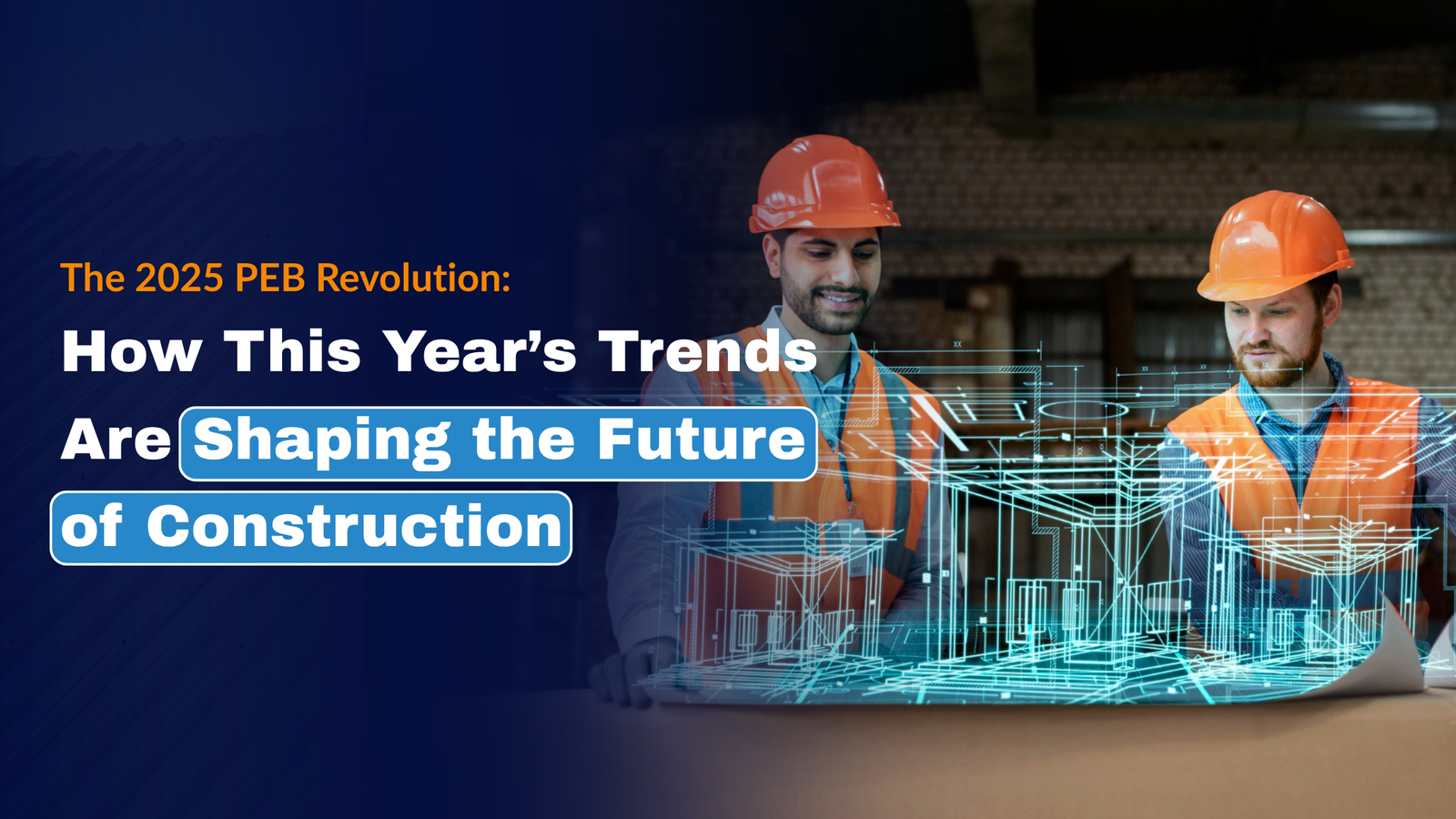
The 2025 PEB Revolution: How This Year’s Trends Are Shaping the Future of Construction
In 2025, Pre-Engineered Building (PEB) construction has emerged as a preferred approach for industries aiming for faster, smarter, and more sustainable infrastructure. This year’s focus on efficiency, digital technology, and modular multi-storey designs has redefined the way modern buildings are planned and executed.
What once served as an alternative to conventional construction is now a leading choice for sectors such as logistics, e-commerce, manufacturing, and large-scale industrial projects. At Adoriva Infratech, we’ve closely aligned with these advancements, delivering structures that combine innovation, precision, and environmental responsibility.
Efficient and Economical Construction
In 2025, the emphasis on cost efficiency and resource optimization has made PEBs highly practical. By fabricating structural components in controlled factory settings, material wastage and site labor requirements are greatly reduced. This method has helped businesses achieve 15–30% lower overall project costs compared to traditional construction methods.
Prefabricated components also make it possible to complete projects in nearly half the usual time, reducing labor costs and enabling faster occupancy. With the use of advanced tools like Building Information Modeling (BIM) and 3D modeling, engineers can design with greater precision and minimize material use while maintaining high structural strength.
The adoption of IoT-based monitoring systems has further improved performance and maintenance efficiency. Real-time data collection helps identify potential issues early, reducing long-term operational costs and enhancing building lifespan.
Sustainable Building Practices
Sustainability has become an essential element of modern construction, and PEBs naturally align with this approach. Recyclable steel, energy-efficient insulation materials such as PUF and Rockwool panels, and cool roof coatings are now standard features. Natural lighting and ventilation systems are also being integrated to reduce dependency on artificial energy sources. These measures not only lower carbon emissions but also help organizations meet environmental and ESG commitments, making PEBs both economically and ecologically viable.Integration of Technology and Smart Systems
Technology plays a vital role in the current PEB landscape. The use of AI, IoT, and BIM has enhanced project accuracy, planning, and execution. Smart building systems—such as automated lighting, energy monitoring, and digital twin technology—allow owners to manage facilities more efficiently over time. Another major step forward has been the success of multi-storey PEBs. With advanced engineering, these structures are now being used for offices, retail spaces, and mixed-use developments, especially in areas where space is limited. Improved seismic resistance, corrosion protection, and high-strength coatings have also increased structural durability and safety. Looking Ahead
The achievements of 2025 are shaping the future direction of the PEB industry. Sustainability is becoming a standard requirement, and modular, prefabricated systems are set to dominate upcoming projects. As technology continues to evolve, buildings will become more adaptive, intelligent, and cost-efficient. The demand for PEBs is expected to rise significantly in the coming years, supported by their proven reliability and flexibility across multiple sectors.
At Adoriva Infratech, we remain committed to advancing these trends—combining smart engineering, green design, and digital innovation to deliver structures that are efficient, sustainable, and built to last.Because with Adoriva, you don’t just get a building - you get a smarter, greener, and more economical solution for tomorrow. .
📧 Write to us at sales@adorivainfra.co.in
📞 Call us at +91 7666964553
