
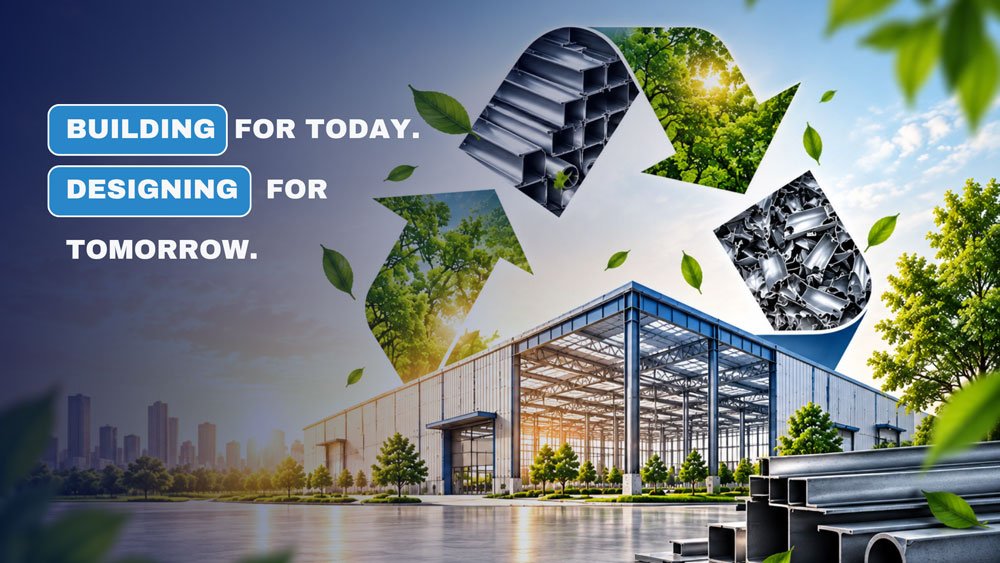
As the construction industry looks for more resource-efficient solutions, steel buildings offer an important advantage: steel can be recovered and recycled at the end of a structure's service life. This recyclability can support the principles of the circular economy in construction, helping reduce material waste and make better use of existing resources.
What Is the Circular Economy in Construction?
The circular economy in construction focuses on keeping materials and resources in use for as long as possible while reducing waste and unnecessary consumption.
Unlike a traditional linear model—take, make, use, dispose—a circular approach considers what happens to construction materials throughout their entire lifecycle.
In practice, this means thinking about:
- Material efficiency
- Durability and longer service life
- Reuse and recovery
- Recycling
- Reduction of construction waste
- Responsible resource management
For the construction sector, these principles can influence decisions right from design and material selection to demolition and material recovery.
Why Does Steel Matter in a Circular Construction Model?
Steel is widely used in structural applications because of its strength, durability, versatility, and recyclability.
One of its key advantages is that steel can be recovered from structures and processed into new steel products.
This gives steel an important role in discussions around sustainable construction and circularity.
Steel Can Be Recovered at the End of a Building's Life
When a steel building reaches the end of its useful service life, its structural components can potentially be dismantled, recovered, and directed toward reuse or recycling depending on their condition and the project requirements.
This means the material does not necessarily have to become construction waste.
Steel's ability to re-enter the material cycle makes it an important consideration for circular construction strategies.
The Recyclability Advantage of Steel Buildings
The recyclability of steel buildings is one of the strongest reasons steel continues to be considered in sustainable building strategies.
A steel structure can potentially offer opportunities for material recovery, reuse, and recycling, helping reduce the amount of material sent to landfill.
1. Supports Material Recovery
Steel components can be separated from other materials during dismantling.
This can make recovery and sorting more practical compared with materials that are difficult to separate or process.
2. Helps Reduce Construction Waste
When materials can be recovered and recycled, the quantity of waste requiring disposal can potentially be reduced.
For projects focused on sustainable construction, material recovery should therefore be considered throughout the building lifecycle.
3. Keeps Valuable Material in Circulation
Recycling allows steel to return to the manufacturing cycle rather than simply being discarded.
Keeping valuable materials in circulation is a fundamental principle of the circular economy.
Steel Buildings and Sustainable Construction
Sustainability in construction is not limited to the energy performance of a finished building.
It also involves considering:
- Where materials come from
- How efficiently they are used
- How much waste is generated
- How long materials remain useful
- Whether materials can be recovered
- What happens at the end of a building's life
This broader lifecycle perspective makes steel construction relevant to conversations around sustainable development.
Durability and Long-Term Use
A sustainable building should ideally provide value over a long period.
Steel's structural strength and durability can support long-term building applications when the structure is properly designed, fabricated, protected, maintained, and used for its intended purpose.
Longer service life can mean fewer requirements for complete replacement over time.
Designing Steel Buildings for Circularity
Recyclability is not only determined by the material itself. Design and construction decisions can also influence how easily materials can be recovered later.
Design for Disassembly
Where practical, designing structural systems with future dismantling and component recovery in mind can support circularity.
Considerations may include:
- Accessible connections
- Modular structural systems
- Standardised components
- Clear material identification
- Minimising unnecessary material combinations
The objective is to think beyond the building's initial construction and consider its future adaptability and material recovery.
Adaptability Can Extend Building Life
Buildings sometimes need to accommodate changing business requirements.
A structure that can be modified, expanded, repurposed, or adapted may remain useful for longer.
This supports a fundamental circular-economy principle: keep buildings and materials useful for as long as possible.
Reuse vs. Recycling: What's the Difference?
Both reuse and recycling can contribute to circular construction, but they are not the same.
Reuse generally means using a component or material again with minimal reprocessing.
Recycling involves processing material so it can be used to produce new material or products.
Where technically and economically feasible, direct reuse can preserve more of the value already invested in a component, while recycling provides another pathway for keeping material in circulation.
For steel buildings, both approaches can be considered when planning for the future lifecycle of a structure.
How Steel Construction Can Support Resource Efficiency
Efficient material use is another important element of sustainable construction.
Good engineering and project planning can help optimise structural requirements while considering factors such as:
- Building span
- Structural loads
- Material specifications
- Fabrication requirements
- Transportation
- Site conditions
- Construction methodology
Prefabrication and Controlled Manufacturing
Steel components can be fabricated in controlled manufacturing environments before being transported to the construction site.
This approach can support better material planning and organised construction, while potentially reducing unnecessary site waste.
However, the sustainability outcome depends on the complete project lifecycle, including material sourcing, transportation, manufacturing, construction, maintenance, and eventual recovery.
Why Circularity Matters for the Future of Construction
The construction industry is increasingly expected to think beyond simply completing a building.
Future-focused construction requires consideration of the entire lifecycle of materials and structures.
The circular economy encourages stakeholders to ask:
Can this material be reused? Can it be recycled? Can the building remain useful for longer? Can waste be reduced at every stage?
Steel buildings provide an opportunity to address these questions through durability, adaptability, material recovery, and recyclability.
Why Choose Adoriva Infratech for Steel Building Solutions?
At Adoriva Infratech, we recognise that modern construction requires a balance between performance, efficiency, durability, and responsible material use.
Our approach to steel building solutions focuses on understanding project requirements and developing practical structural solutions suited to the intended application.
Whether the requirement involves an industrial facility, warehouse, manufacturing unit, logistics facility, or other steel structure, thoughtful planning from the beginning can contribute to more efficient project execution and better long-term outcomes.
Building a More Circular Future with Steel
The recyclability of steel buildings gives steel an important advantage in the transition toward more circular construction practices.
From material recovery and recycling to durability and adaptability, steel can contribute to a lifecycle approach that looks beyond the initial construction phase.
For developers, architects, engineers, and businesses, considering material lifecycle and future recovery during the design stage can be an important step toward more responsible construction.
Planning a Steel Building Project?
Get in touch with Adoriva Infratech to discuss your project requirements.
📧 Email: sales@adorivainfra.co.in
📞 Call: +91 7666964553